Alessandria Script Font for Handmade Branding
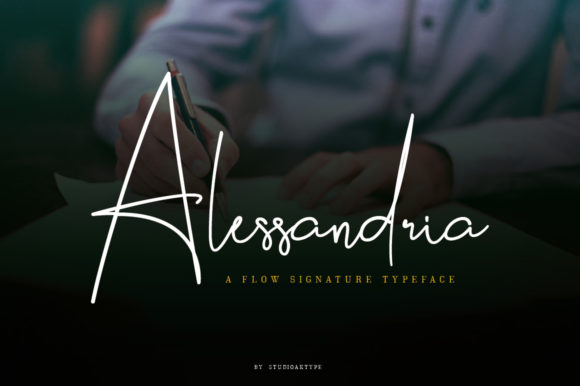
If you’ve ever spent hours tweaking a label, adjusting letter spacing on a wedding welcome sign, or second-guessing whether your printable planner cover feels “just right,” you know how much a single font can shape the soul of your handmade business. That’s why Alessandria landed in my cart—and stayed there. It’s not just another script font. It’s a quiet confidence-builder: elegant but unpretentious, expressive but legible, hand-crafted in feel yet precise enough for production.
What makes Alessandria special is its subtle texture—the soft, organic scratches built into each glyph. They’re not heavy grunge marks; they’re delicate, like ink catching light on handmade paper or chalk dust settling on a farmhouse chalkboard. That natural flow gives every word warmth and movement—perfect for brands that value authenticity over polish. Whether you're designing candle labels for a small-batch soy line or printing boutique gift tags with hand-tied twine, Alessandria adds tactile personality without sacrificing clarity.
For crafters using Cricut, Silhouette, or other cutting machines, readability at small sizes matters. I tested Alessandria at 8 pt on matte sticker paper—and it held up beautifully on 1.5-inch product tags. The letterforms are open and generous, with clear entry/exit strokes and consistent x-heights. No awkward overlaps or cramped counters. That means fewer test cuts, cleaner weeding, and fewer customer questions about “what does this say?” (a real win when your Etsy listing hinges on first impressions).
Think about where you use type most often: the front of a greeting card, the belly band on a soap box, the header on a printable wall art set, or the title on a digital planner bundle. Alessandria shines in display roles—short phrases, names, titles, and decorative accents—not long paragraphs. Use it for “Hand-Poured in Vermont” on a jar label, “Est. 2023” on a shop banner, or “You’re Invited” on a rustic wedding invitation suite. Its rhythm guides the eye gently, never shouting, always inviting.
I’ve used Alessandria across seasons and surfaces: gold-foiled holiday packaging, distressed wood signs for farmers’ markets, minimalist thank-you cards for wedding clients, and even heat-transfer vinyl on linen tote bags. On mugs? Yes—with a clean vector trace and proper kerning, it wraps smoothly around curves. For SVG designers, the clean outlines and intentional spacing make it ideal for layering with shadows, outlines, or watercolor textures in design software.
Pairing matters—and Alessandria plays well with others. I almost always pair it with a friendly, neutral sans serif like Montserrat or Poppins for body text, ingredient lists, or care instructions. That contrast—expressive script + grounded sans—creates instant hierarchy and professionalism. For vintage-leaning stationery, try it with a refined serif like Playfair Display. Avoid pairing with overly ornate fonts; Alessandria’s charm lies in its restrained elegance, not busyness.
As a Script Amp font, Alessandria includes thoughtful extras: alternate characters, contextual ligatures, and swashes that activate automatically in OpenType-aware apps (like Adobe Illustrator or Affinity Designer). I use the swash “y” and “t” for custom monograms on bridal shower invites—and the stylistic alternates give me flexibility when designing matching sets (e.g., a wedding suite where “Mr. & Mrs.” gets a flourish, but the RSVP date stays clean). It supports extended Latin characters, so if you sell internationally or create bilingual printables, you’ll find solid multilingual coverage.
File formats matter too—especially when you’re prepping files for print shops or bundling assets for digital downloads. Alessandria comes in OTF and TTF, so it works seamlessly in Canva (via upload), Cricut Design Space (as a system font after installation), and Silhouette Studio. No missing glyphs mid-cut. No font substitution panic before a big launch.
Let’s talk licensing—because this is where many handmade sellers get tripped up. Alessandria is a commercial font, meaning you’re fully covered to use it in physical products you sell (like stickers, mugs, or packaged goods), in digital downloads (planner pages, Canva templates, SVG bundles), and in client work (e.g., designing a logo or packaging for a fellow small business). Just be sure your license permits *reselling* the font itself—most do not—and avoid embedding it in editable templates where buyers could extract and reuse the font file. When in doubt, check the license terms—but for nearly all craft-based uses, you’re good to go.
Real-world examples from my own shop: I used Alessandria for the “Small Batch • Big Love” tagline on lavender-scented candle labels—customers regularly comment on how “handwritten-yet-polished” it feels. For a spring collection of printable garden journal pages, I paired it with a light sans for headers and kept the body text clean—resulting in a cohesive, seasonal aesthetic that converted well on Pinterest. And for a friend’s bakery, I designed a reusable chalkboard-style welcome sign using Alessandria’s swash “W” and “L”—it now hangs in her storefront and gets tagged in local Instagram stories weekly.
What you’re really buying with Alessandria isn’t just letters—it’s brand consistency. That same font on your Etsy banner, your product label, your Instagram story highlight, and your packaging creates subconscious recognition. Customers begin to associate that graceful flow with your voice, your values, your craftsmanship. In a crowded marketplace, that quiet distinction builds trust faster than any sales copy.
If you’re choosing fonts based on what looks pretty in a preview window, pause. Choose instead for how it performs on a 2-inch sticker, how it traces in your cutting software, how it pairs with your product photography, and how it makes your customer *feel* when they hold your creation in their hands. Alessandria delivers on all of it—not as a trend, but as a tool made for makers who care about both beauty and build.